General information
| SG000085 | |||||||||||||||||
| Glis3 | |||||||||||||||||
| 4833409N03Rik, E330013K21Rik | |||||||||||||||||
| Mus musculus | |||||||||||||||||
| 10090 | |||||||||||||||||
| ENSMUSG00000052942 | |||||||||||||||||
| ENSMUSP00000124635 ENSMUSP00000108231 ENSMUSP00000066953 ENSMUSP00000124143 ENSMUSP00000125721 ENSMUSP00000124823 | |||||||||||||||||
GLIS family zinc finger 3 [Mus musculus (house mouse)] | |||||||||||||||||
| |||||||||||||||||
Reviewed functional gene |
Functional information
| premeiotic | |
| Gonocyte | |
|
1. Abstract | |
| |
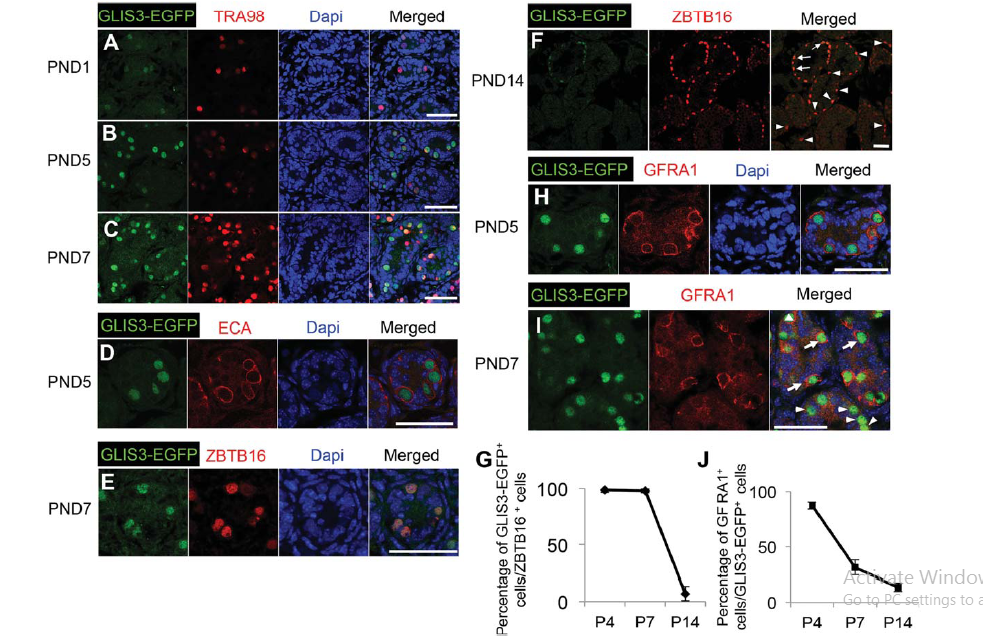
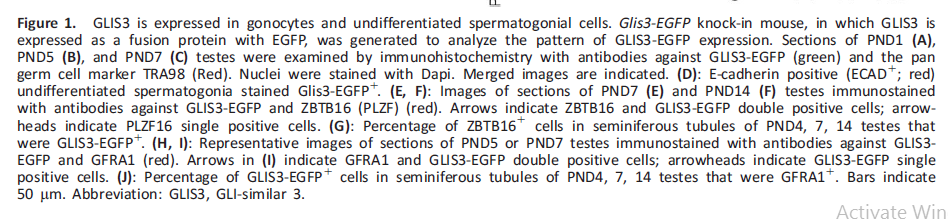
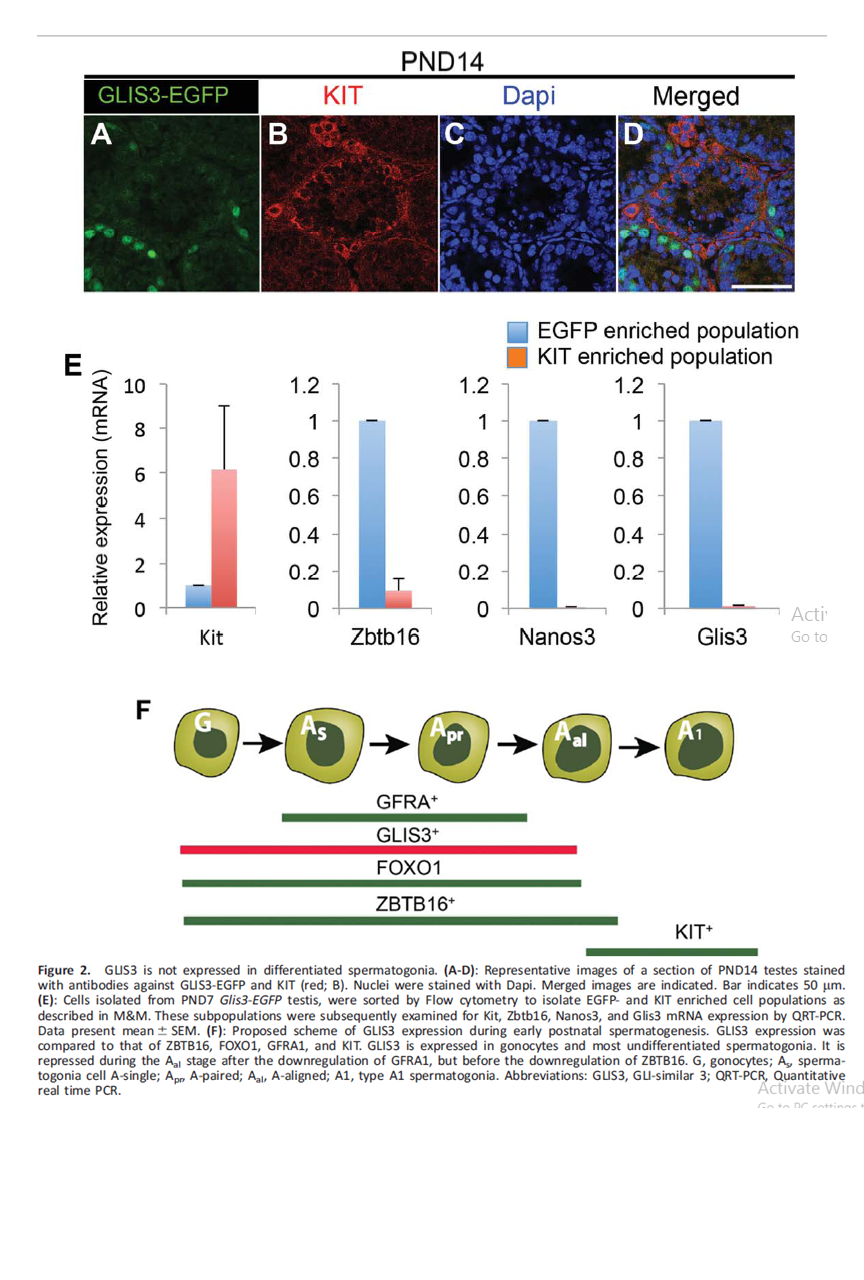
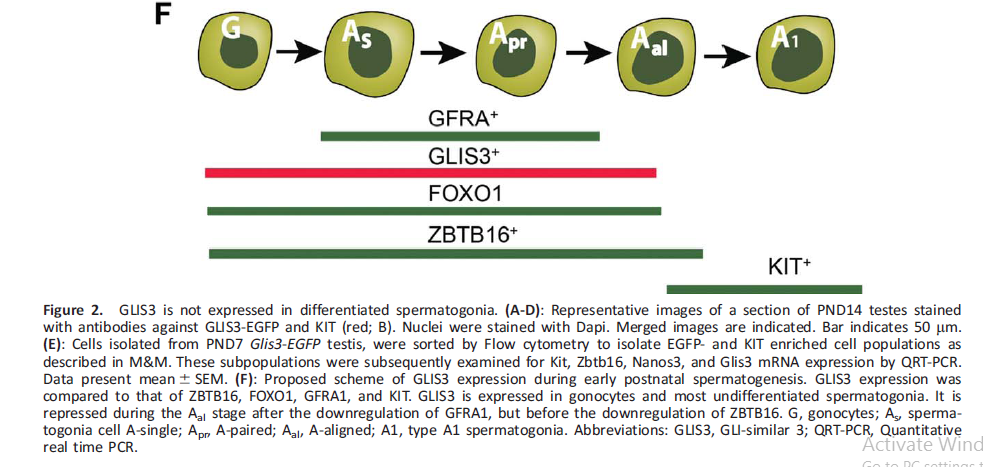
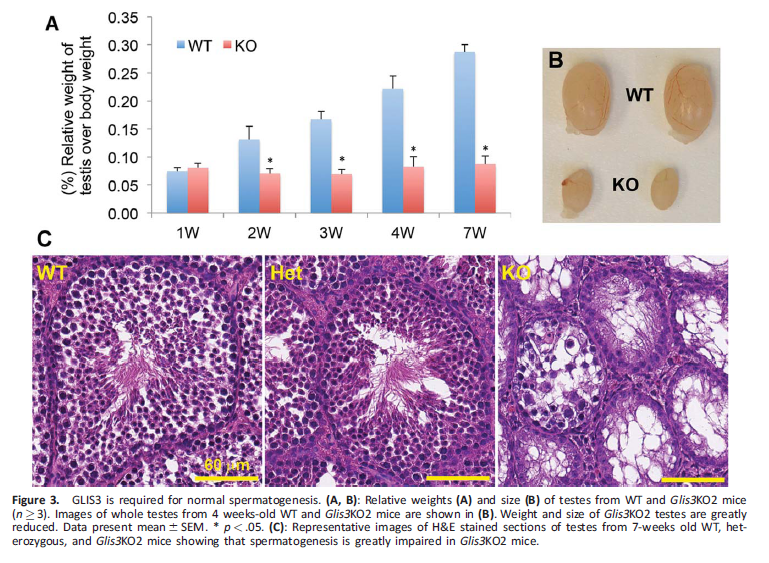
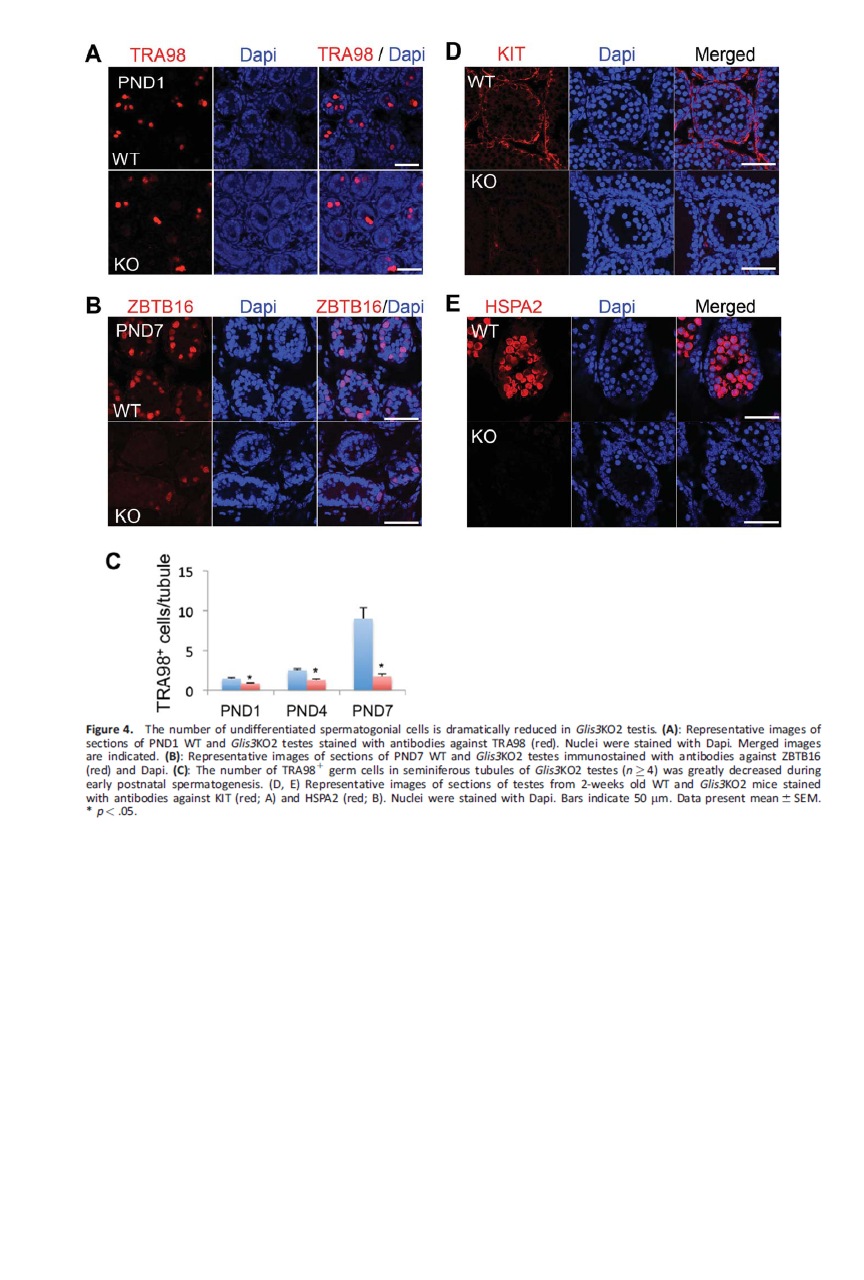
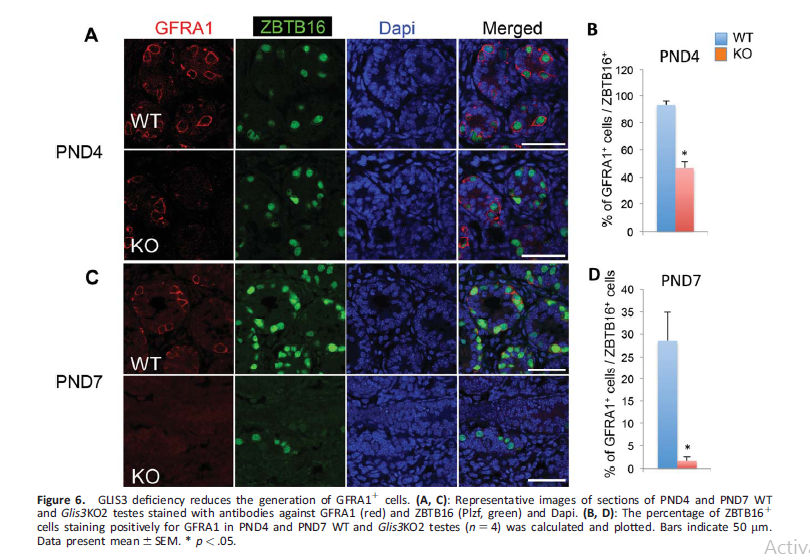
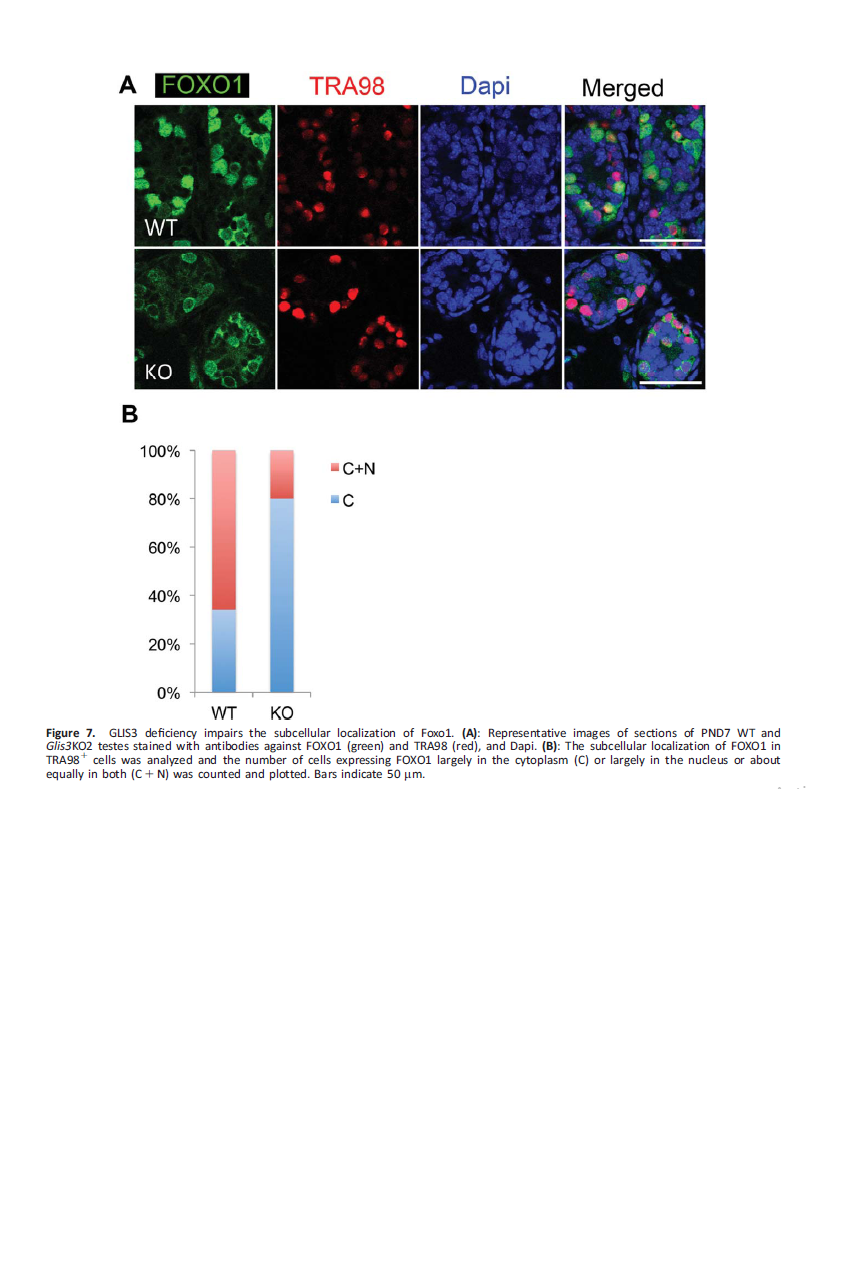
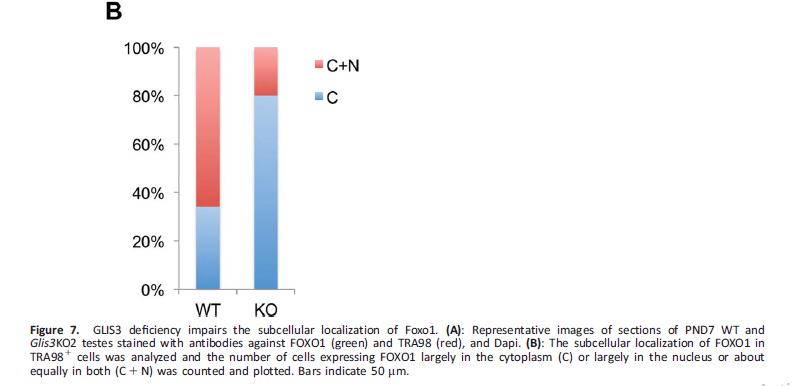
| Kruppel-like zinc finger transcription factor GLI-similar 3 (GLIS3) is expressed in gonocytes, spermatogonial stem cells (SSCs) and spermatogonial progenitors (SPCs), but not in differentiated spermatogonia and later stages of spermatogenesis or in somatic cells. Loss of GLIS3 function causes a moderate reduction in the number of gonocytes, but greatly affects the generation of SSCs/SPCs, and as a consequence the development of spermatocytes | |
| SCO |

Expression and location
| Expressed highest in thyroid gland | |
| Expressed highest in spermatogonium | |
| View detail | |
| View detail | |
| Nucleus |
Mutation in human orthology
|
1000G (Phase 3): 19885 ESP6500 (SI-V2): 227 ExAC (r0.3.1): 1176 dbSNP(Build 147): 37566 |
|||||||
|
Chinese health control (254): 30 European health control (283): 24 Chinese patients (168): |
|||||||
|
Other information
|
Click the right sign for more information
| |||||||||||||||||||||||||||||||||||||||||||||||||||||||||||||||||
| |||||||||||||||||||||||||||||||||||||||||||||||||||||||||||||||||
| Q6XP49 |